Start to Improve Your Reading, Writing, and Critical Thinking
Blog
What to Look for in an Online English Tutor
Do you have a fondness for English classes, or perhaps find them less appealing, or is your stance somewhere in between? During my high school years, I struggled academically until I encountered Jeanne Edwards, a teacher who inspired me to hone my writing abilities and improve my grasp of English. She not only motivated me but also entrusted me with the role of editor for our high school newspaper. Ms. Edwards was one of several significant mentors in my life who wielded a positive influence.
During my tenure as a college English instructor, some of my students expressed initial apprehension and self-doubt about their writing capabilities. However, as the semester progressed and we worked collaboratively to enhance their writing skills, their perspective changed. Our joint efforts led them to appreciate the profound impact words and ideas can have when articulated through various forms of writing. So, the question is what should you look for in an online English tutor to improve your reading writing, and critical thinking skills?
It’s crucial to find a tutor who can tailor their approach to your specific needs. Factors such as cost, availability, and experience should be considered. Additionally, compatibility and a positive rapport with the tutor are vital since you’ll be investing considerable time together. Assess if a trial class is available and if the tutor assigns and evaluates homework outside of class. Trust your initial instincts, and if the fit isn’t right, be proactive in seeking out another tutor. Choose someone who can aid you in advancing your comprehension and usage of the English language, a skill that will prove invaluable throughout your academic journey, professional pursuits, and life in general.
Below, you’ll find a series of blog posts that I’ve authored and am presently refining:
I invite you to peruse the posts that pique your interest, and I genuinely appreciate your likes and shares. Stay tuned for forthcoming updates.
Blog Post 1
Should Teachers Be Required to Use Hip-Hop in the Classroom?
Harnessing the Power of Hip-Hop in Education: An Exploration
by Larry Alexander
September 16, 2023
Imagine driving down the street when suddenly a car pulls up alongside, blaring a hip-hop track filled with potent lyrics, pulsating beats, and raw energy. The music reverberates through your body, making you acutely aware of its presence. Then, just as quickly as it arrived, the car disappears, and the world returns to its familiar rhythm.
This scenario has become increasingly common, reminding us that hip-hop is everywhere; it’s an inescapable force in modern culture. It permeates our radios, television screens, the internet, and even our classrooms. The question that arises is how to harness the undeniable influence of hip-hop effectively within the realm of education.
In this blog, I examine hip-hop-based education (HHBE) – a teaching approach that employs hip-hop culture and music as educational tools and where educators draw upon the dynamic elements of hip-hop to captivate students and connect with them on a cultural level.
However, the use of HHBE raises essential questions:
Is incorporating hip-hop in education merely a cop-out, or should it be an educational imperative?
Does hip-hop have the potential to elevate the learning experience?
Conversely, how can educators navigate the explicit content and negative themes prevalent in some hip-hop music, such as profanity, violence, and misogyny?
This blog aims to address these questions and provide valuable resources for anyone interested in the intersection of hip-hop and education, whether you’re a student, parent, educator, or simply intrigued by the educational journey of young minds.
In this post, there is a TEDx video, an article about the power of hip-hop music, a Goldman Sachs projection on hip-hop music sales, a definition of hip-hop, questions about hip-hop based education, a definition of hip-hop based education, a discussion on American education issues, and a brief book review on hip-hop based education.
We also meet Cassie Crim, Alex Fruchter, and Quam Neloms, three teachers who use hip-hop based education in their classrooms, and Nolan Jones, an Oakland, California, professor who trains teachers on hip-hop based education, curriculum, and practices.
In my next post, we will look at some of the negative aspects of hip-hop; then we will discuss research on hip-hop based curriculum and practices.
Keep in mind that the research on this question is voluminous, and I am barely scratching the surface in terms of what is available. You can find some great articles on the Internet and on Google Scholar if you want to research this topic. Just search for articles on hip-hop in education.
Thank you for reading this post and for all of your thoughts and ideas!
Using Hip-Hop Based Education in the Classroom(HHBE)
Donna-Claire Chesman, an editor at DJBooth, examines the successful use of hip-hop in education in a 2018 article. She focuses on Cassie Crim, a Joliet West High School teacher in Illinois who incorporates hip-hop learning into her math classes, and Alex Fruchter, an Assistant Professor of Instruction at Chicago’s Columbia College who uses hip-hop learning in all three of his classes.
Cassie Crim
Cassie Crim has been teaching high school math for 10 years and did a rap video based upon a Cardi B song. After the video was released, Crim noticed more student participation and engagement in class. For example, one student said, “Ms. Crim, I can’t stand math, but dang, you doing this video caught me off guard and now I’m gonna have to really pay attention” (Chesman).
She knew that she had inspired that student. “He said that to me in the middle of class. Good! That was the purpose. I want to connect with my students, I wanna get them engaged and get that buy-in” (Chesman).
You can see a 2017 Cate Caugurian ABC interview with Crim here:
Alex Fruchter, a professor at Chicago’s Columbia College and co-owner of the indie music label Closed Sessions, incorporates hip-hop into his courses to help prepare students for life in the music industry. The courses are Business of Music, Applied Marketing: Music Business, and AEMMP Hip-Hop Practicum (Chesman).
He recognizes the relevance of using hip-hop in education when he asserts: “I use stories from Closed Sessions in all my classes, and I bring in artists, attorneys, music supervisors, booking agents, etc. in all my classes. I actually wrote a hip-hop based curriculum called ‘You Can Quote Me On That.’ It used hip-hop songs to teach psychology and sociology to elementary and high school students” (Chesman).
In his AEMMP practicum course, which is closely tied to hip-hop, students get the full label experience- which includes pitching the college for a budget, setting up studio sessions and events, and running social media campaigns (Chesman).
Fruchter argues that hip-hop based education is becoming more prevalent in the classroom because “Education is part of hip-hop culture…The fifth element of hip-hop is knowledge” (Chesman).
Quan Neloms
I came across a 2018 self-profile on Quan Neloms in the Education Post. Be sure to view the link in the Education Post below which contains a video on Neloms with some of his pupils.
Neloms is a Detroit public school teacher who uses hip-hop in the classroom to encourage his students to think creatively by analyzing hip-hop lyrics. He found that by engaging his students in hip-hop analysis, he was able to increase student achievement using a curriculum called Rhymes with Reason and increase test scores and achievement within a 10-week period (Neloms).
He also started the Lyricist Society nine years ago, a program that uses hip-hop to get students more involved in their learning. He calls it an important program because “The subjects and vocabulary utilized in hip-hop are tools that engage students in higher-level thinking. And seeing their own interests touted as brilliant and scholarly leads them to see themselves in the same light” (Neloms).
Research analyst Charloitte Götting prepared a 2018 report for Statista on album music consumption by genre. She found that hip-hop and rap are the most popular music in America and accounted for 21.7 percent of the music consumed by Americans, followed by pop with 20.1 percent, rock with 14 percent, and R&B with 10.6 percent (Götting).
Goldman Sachs also recognizes the popularity of hip-hop music and according to a 2019 article inForbes
forecast that music revenue is going to more than double to about $131 billion by 2030. Currently music streaming sales are dominated by top R&B and hip-hop artists such as Drake, Kendrick Lamar, The Weekend, Migos and Cardi B. Music publishers and labels also stand to profit greatly from the rise of streaming, led by black listeners who are the largest user group…R&B and hip-hop are music’s most consumed genre and leading the industry’s revival (Hale).
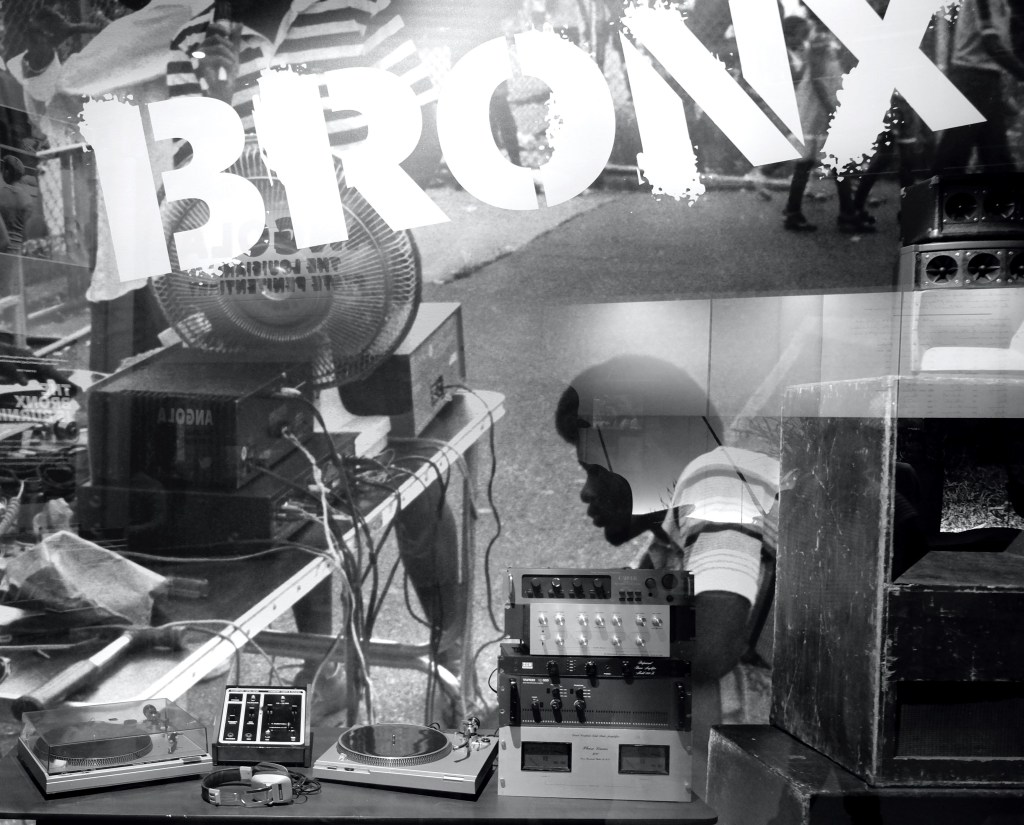
These articles highlight the significance of hip-hop music, which has exploded in worldwide popularity since its origin in the 1970s in the South Bronx.
Because of the influence of hip-hop on young people, a number of educators and scholars have used it in the classroom to motivate and inspire student learning. Although people have different opinions on the effectiveness of this approach, it is being used more and more frequently to teach students about subjects like math, science, and English.
Origin of Hip-Hop
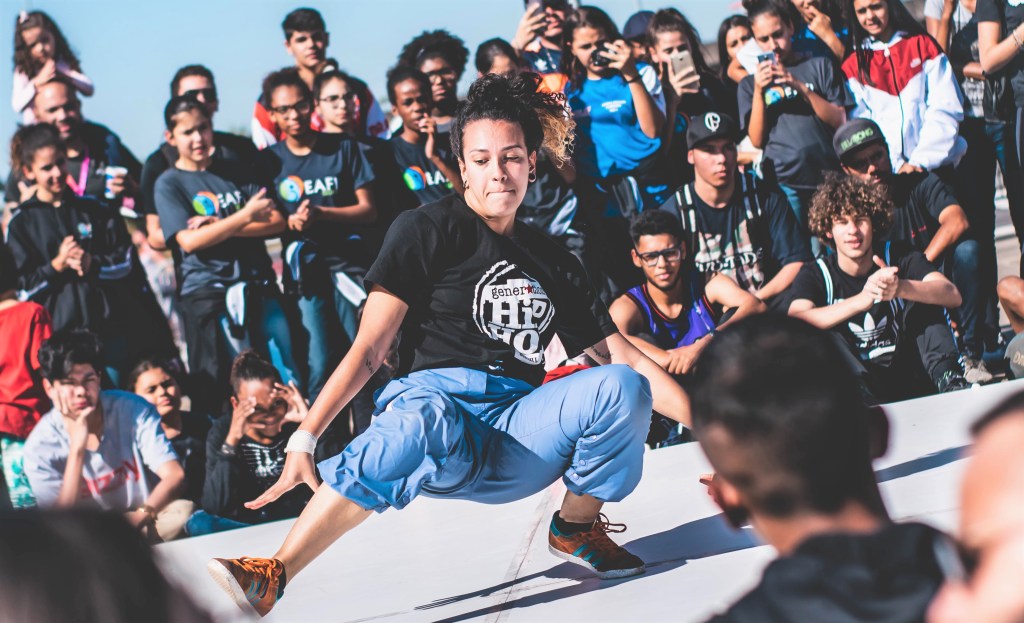
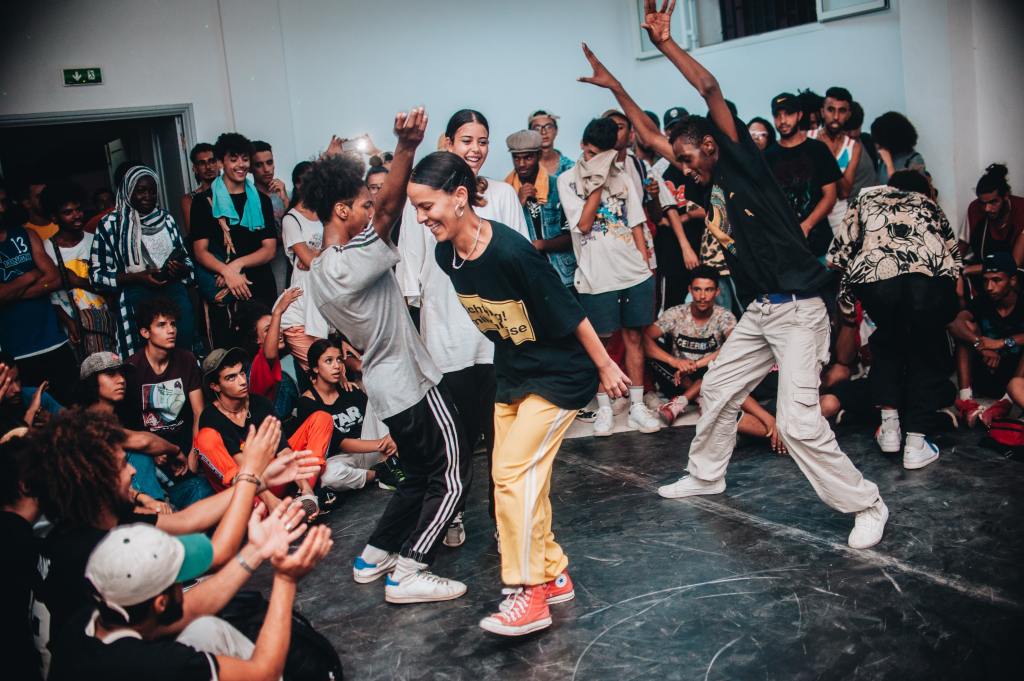
Hip-hop originated in the South Bronx in the 1970s by Black and Latino teens and is composed of four* elements: deejaying (aka turntabling), rapping (aka MCing or rhyming), graffiti painting (aka graf), B-boying (hip-hop dance, style, attitude, and body language), *knowledge of self/consciousness is sometimes added by socially conscious hip-hop artists and scholars (Tate).
Questions About Hip-Hop Based Education or Pedagogy (HHBE)
Some of the questions asked about this topic include: What is hip-hop based education? Who supports it? Who opposes it? Is there a hip-hop based curriculum? Is there certification or training? Who is qualified to teach it? Who is using hip-hop based education in classes? How do you measure if it works? Are all grade levels appropriate for hip-hop based education? Who funds hip-hop based education?
What is Hip-Hop Based Education?
A 2015 article by professors Edmund Adjapong and Christopher Emdin in the Journal of Urban Learning on the use of hip-hop pedagogy defined it “as a way of authentically and practically incorporating the creative elements of Hip-Hop into teaching, and inviting students to have a connection with the content while meeting them on their cultural turf by teaching to, and through their realities and experiences” (Adjapong and Emdin 67).
Education Issues
In 2008, Chance Lewis and other researchers at Texas A&M University examined the educational performance of African American students in urban school settings, the consistent black and white student achievement gap, and recommendations on how to close the gap. They also looked at previous research on black and white student achievement- including studies that assumed the reality of high African American academic failure, blamed the learner for their academic situation, or demonstrated that African American learners went through periods of academic successes and failures (Lewis et al. 127-128).
They conclude with this thought: “Nearly 9 out of 10 African American students attending urban schools… are not meeting proficiency rates in reading and math. It is not possible to imagine a situation more bleak and disparate than the educational crisis in urban America…We reluctantly concede that in its current condition, American education is ill-equipped to meet the needs of African American learners, particularly those in urban educational settings” (Lewis et al. 148).
Education writer Kate Barrington also addresses failures in American education in a 2022 article in Public School Review. She summarizes 15 problems with the American education system, including rising violence, student poverty, lower performance on standardized tests, mental health challenges, a lack of parental involvement, a lack of teacher innovation, and teachers using outdated teaching methods and failing to meet the needs of their students (Barrington).
These essays raise the question: Can hip-hop based learning help to address a system that is failing to meet the needs of its students?
Can Hip-Hop Based Learning Address Education Issues?
The Harvard Educational Review examines the 2013 book on this topic called Schooling Hip-Hop: Expanding Hip-Hop Based Education Across the Curriculum by scholars Marc Lamont Hill and Emery Petchauer.
Marc Lamont Hill and Emery Petchauer
Hill and Petchauer support using hip-hop based learning in the classroom to address some of the failures in American education. However, they recognize a need for a “deeper aesthetic, epistemological, and theoretical engagement with hip-hop as a holistic cultural movement” beyond teachers who use rhymes to help students memorize facts or to encourage adherence to dress codes. Both support additional research on hip-hop culture and how HHBE can be used in subjects other than English (qtd in Harvard).
The book’s contributors emphasize that although using rap and rhymes to help students with memory is popular, hip-hop pedagogy extends beyond teachers who rap. They advocate finding alternatives to using “rappin” as the main teaching tool and call for more educational focus on knowledge of self, the fifth element of hip-hop (qtd in Harvard).
As one example of how hip-hop pedagogy extends beyond teachers who rap, one of the the book’s contributors, Derek Pardue, shows how hip-hop is being used to influence how Brazilians see citizenship and education. He describes how the Canhema Cultural Center in Rio de Janeiro was initially operated by the government but subsequently turned over to a committee and later became known as the “Hip-Hop House,” which focuses on the relationship between the hip-hop arts and Brazilian hip-hop cultural forms (qtd in Harvard).
According to the Harvard Educational Review, one weakness of their research is its inability to draw a strong connection between hip-hop pedagogy and academic content; however, Hill and Petchauer persuasively promote the importance of hip-hop pedagogy in each chapter of the book (Harvard).
Teaching Hip-Hop Based Education
Although it sounds reasonable to promote addressing education issues with hip-hop based learning, how do teachers learn how to teach it?
Professor Nolan Jones of Mills College in Oakland, California, addresses this question in a 2020 essay. He highlights teachers who use the most popular music in America to make subjects more relevant to their students. One instructor teaches high school math and uses rap in her class, another uses rap to study current events and history, and a third has his students study rap lyrics for college vocabulary and concepts relating to American history (Jones).
He calls this type of teaching hip-hop pedagogy, or teaching that uses the popularity of hip-hop to motivate student learning, and he says each of the teachers using it has seen improvement in pupil test scores and achievement (Jones).
Jones has taught hip-hop pedagogy courses for the last 10 years for K-12 teachers and for higher education teachers, and he believes that the courses can help connect students to subjects from Shakespeare to neuroscience. According to him, the keys to teaching hip-hop pedagogy are for teachers to be genuine, avoid gimmicks, and keep their instruction relevant to the subject matter (Jones).
He also recognizes the importance of almost 30 years of scholarly research examining the effectiveness of hip-hop in education and says the research “has found that hip-hop can be used to teach critical thinking skills, critical literacy, media literacy skills, STEM skills, critical consciousness and more.” In addition, over 300 colleges and universities now offer courses on hip-hop, despite initial questions about the validity of this approach (Jones).
Jones argues that teachers need to use hip-hop culture to reach students because “Many students are already forming their views of society and the world based on the lyrics of their favorite rap artists. It only makes sense to infuse what they’re already listening to into the class so that – at the very least – there’s a common point of reference” (Jones).
Final Thoughts
I hope this blog raised questions in your mind about the use of hip-hop based education in the classroom. We looked at the popularity of hip-hop, educational issues, and educators who support using it as a tool to motivate and inspire students. Supporters claim improvement in motivation, learning, and test scores. If you found this post informative, please share it with your friends and colleagues to see what they think.
You can also send me your thoughts at tutorwithlarry@gmail.com.
In my next post, we will look at some of the negative aspects of hip-hop.
Thank you again for reading this post and for all of your ideas on this issue!
Works Cited
Adjapong, Edmund S., and Christopher Emdin. “Rethinking Pedagogy in Urban Spaces: Implementing Hip-Hop Pedagogy in the Urban Science Classroom.” Journal of Urban Learning, Teaching, and Research, vol.11, pp. 66-77, 2015.
Barrington, Kate. “The 15 Biggest Failures of the American Public Education System.” Public School Review, 27 May 2022.
Caugurian, Cate. “Rapping Joliet Math Teacher Creates Viral Video to Help Students.” ABC7 Chicago, WLS-TV, 5 Nov. 2017.
Chesman, Donna-Claire. “From the Crates to the Classroom: Legitimizing Hip-Hop in Education.” DJBooth, 14 Feb. 2018.
Götting, Marie Charlotte. “Music Album Consumption in the U.S. by Genre 2018.” Statista, 8 Jan. 2021.
Hale, Kori. “Goldman Sachs Bets on Hip Hop and Millennials for Music Revival.” Forbes, 6 Feb. 2019.
Harvard Educational Review. “About Schooling Hip-Hop: Expanding Hip-Hop Based Education Across the Curriculum.” vol. 84, Winter 2022.
“Home.” Rhymes with Reason, 3 May 2022.
Jones , Nolan. “Why Hip-Hop Belongs in Today’s Classrooms.” The Conversation, 20 Nov. 2020.
Lewis, Chance W., et al. “Framing African American Students’ Success and Failure in Urban Settings.” Urban Education, vol. 43, no. 2, 2008, pp. 127–153.
Neloms , Neloms. “Literacy Powered by Students’ Favorite Music.” Rhymes with Reason, 3 May 2022.
Neloms, Quan “Video: This Detroit Teacher Uses Hip-Hop Literacy to Engage His Students and the Community.” Education Post, 2017.
Neloms, Quan. “What Is Lyricist Society?” YouTube, 2 Feb. 2016.
“Rapping Joliet Math Teacher Creates Viral Video to Help Students.” ABC7 Chicago, 5 Nov. 2017.
Tate, Greg, et al. “Hip-Hop.” Encyclopædia Britannica, 12 Jan. 2023.
Blog Post 2
How to Write a Great Story or Anything Else
by Larry Alexander
January 30, 2021
Updated February 8, 2023
If you really want to learn how to tell a great story, check out the Paradigm Online Writing Assistant by professor Chuck Guilford.
It has helped me with personal, academic, and business writing. His website starts with the statement: “Use your writing process to learn and discover.”
The topics that you will learn include writing a draft, choosing a subject, strong sentences, grammar, storytelling, thesis statements, and using outside sources.
You can start today to become a better writer. Go for it!!
Malaika Costello-Dougherty is a writer for Edutopia. In this informative 2009 article, she describes how Daniel Joseph Duey and Alex Kajitani use hip-hop beats to teach math to their middle school students.
Then see what you think of two YouTube videos: One is a 2011 video on Math Rap by Mathodman, and the other is Mr. A’s 2017 Math Rap.
Duey is a professional rapper and teaches middle school in Westland, Michigan. His video called Fractionshas been shown on TeacherTube.com and in math classes around the country. Teachers use the video “to introduce a lesson, engage inner-city students who prefer music to math, and show students how to calculate their grades on an assignment” (Costello-Dougherty).
The video has more than 580, 000 views and teachers say “When these teachers play rap videos like Fractions in class, they find that students can quickly grasp complicated concepts: The repetition and rhyme help with memorization, and students connect with the lesson” (Costello-Dougherty).
Alex Kajitani, known as the rappin mathematician, also uses hip-hop to relate to his students. He teaches middle school in Escondido, California, and says it’s one of the most poverty-stricken areas of California. When he first started teaching, he could not get students to pay attention. However, when he noticed how easily they memorized rap songs, he went to work and created a hip-hop song for a math lesson. It was a disaster, but the students loved it-and he had made the teaching connection that he wanted (Costello-Dougherty).
He later heard the students rapping to his song So Many Lines, and they seemed excited about class the next day. In the process, they learned that “parallel lines are two lines that never touch, they never intersect, and that’s why they are such” (Costello-Dougherty).
Also, check out these next two videos. Does this seem like a good way to get students interested in math?
Works Cited
Costello-Dougherty, Malaika. “Rapping Math Teachers Bring It.” Edutopia, George Lucas Educational Foundation, 2 Nov. 2009.
“Mr. A’s 2017 Math Rap -‘The Real Math Students’.” YouTube, 6 June 2017.
Blog Post 4
How to Become a Rap Star With Closed Sessions
September 12, 2025
The golden age of hip-hop usually refers to the period between the mid-1980s to the mid-1990s which saw the origin and explosion into the mainstream culture of hip-hop: rap, break dancing, graffiti art, and deejaying. With the release of its third hip-hop compilation in 10 years, is Chicago-based indie record label Closed Sessions in the process of creating a new golden age in hip-hop?
Articles by Ogden Payne, Tara C. Mahadevan, and Jack Riedy reveal how Closed Sessions has been influencing Chicago’s hip-hop music scene since 2009 by providing a platform for creative content and album releases.
Following the articles is a 2020 profile by Val Warner of ABC7 Chicago of Michael Kolar of Soundscape Studios.
Ogden Payne
Ogden Payne is a contributing writer to Forbes, and we learn from this 2016 article that the name “Closed Sessions” came from closed video sessions that Alex Fruchter and Michael Kolar had with various hip-hop talent. Co-owner Alex Fruchter introduced the artists to Chicago eateries, and then they would record at Soundscape Studios with chief audio engineer and co-owner Michael Kolar. Those recordings would later be used on breakout projects by the artists (Payne).
Soundscape Studios helps emcees with their breakout projects, while Fruchter promotes live shows at local outlets. Their philosophy is to support new talent while teaching them about the nuts and bolts of the music business. According to Kolar, “I’ve seen some [artists] get lost in the major label system; I’ve seen some get lost and then climb their way to priority, but we [at Closed Sessions] don’t want to take anything on that we don’t think we can put our effort into” (Payne).
This artist-friendly business model at Closed Sessions is based on grassroots marketing, building a fan base, and not skipping steps. Additionally, says Payne, “That model grants Closed Sessions’ artists 100% ownership of their master recordings – typically an asset held by the record company who then pays the artist 10-15% of the retail price in royalties” (Payne).
Tara C. Mahadevan
In this 2020 article, journalist Tara Mahadevan of Bandcamp Daily explores what motivated Fruchter and Kolar to create a Chicago indie hip-hop label in Chicago and showcases a number of Closed Sessions’ artists. She provides excellent music samples for Jack Larsen, Jamila Woods, Femdot, and Kweku Collins.
Be sure to check out the music samples and her insightful comments about each artist in this link:
Jack Riedy’s 2020 article in BlockClub Chicago analyzes the third hip-hop compilation by Closed Sessions in ten years. Alex Fruchter says that in response to outside labels attempting to define Chicago hip-hop, the first two Closed Sessions compilations were designed to bring “artists like Raekwon, Freddie Gibbs and Action Bronson into Chicago’s artistic orbit alongside hometown artists like GLC and Sir Michael Rocks” (Riedy).
The 2019 compilation includes BoatHouse as the producer, together with contributions by out-of-town artists Kemba, Curtis Roach, and Khary, and Chicago rap acts Ajani Jones, ShowYouSuck, and duo Mother Nature. Los Angeles rapper Open Mike Eagle, born in Chicago, also appears in the compilation’s lead single “Whiskey And Push-Ups” ( Riedy).
Jones credits the label for helping him to focus on long-term success: “They helped me by showing me the ropes in the industry, and how it works, and what it really takes to garner the attention that you’re seeking…Before I just kept putting music out because that’s what I love to do, but I think I became a lot more aware of what my music does and what effect it can have on people” (Riedy).
Val Warner
Val Warner profiles Michel Kolar of Soundscape Studios in this 2020 ABC7Chicago video. You can see it here:















 Tutor With Larry