Should Teachers be Required to Use Hip-Hop in the Classroom?
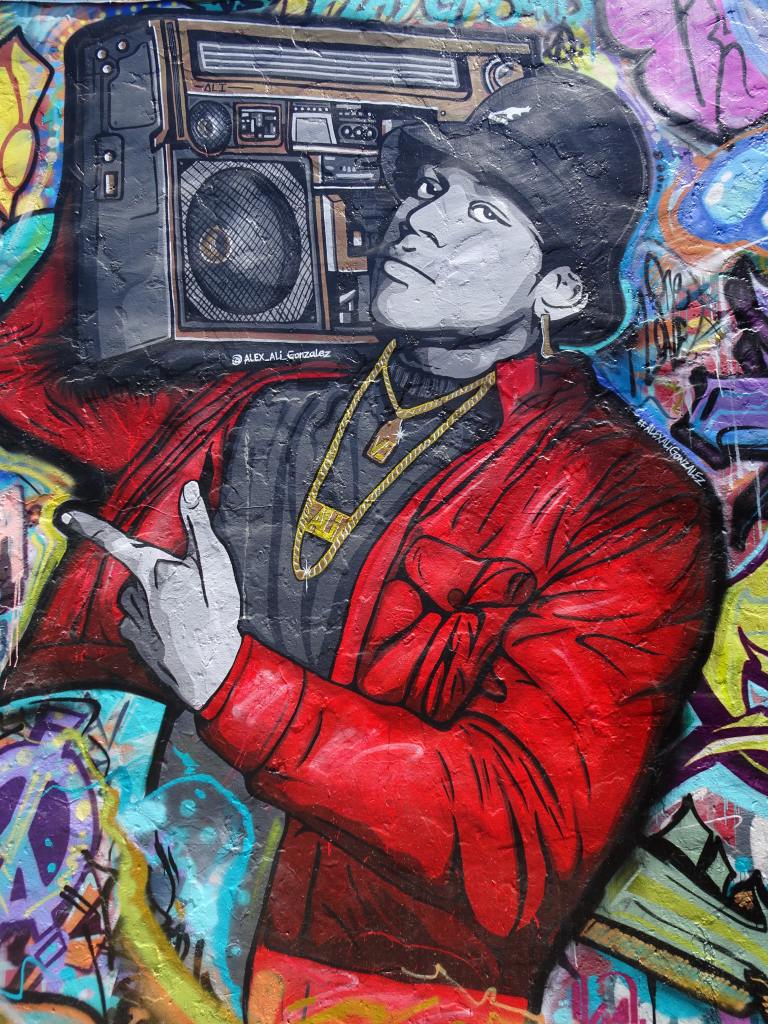
Hip-hop is everywhere, and you can’t escape it. Turn on the radio and you can quickly find a station that plays hip-hop. Watch television and there are hip-hop programs and commercials using hip-hop jingles to sell just about everything. It is on the Internet, in newspapers, and even in education. Hip-hop clearly has a powerful influence on young people, so one issue is how to best use this powerful influence in the classroom.
My last post asked whether teachers who use hip-hop in the classroom are copping out. Perhaps a better question, given the strong influence of hip-hop on young people and the state of education in our country, is whether teachers should be required to use hip-hop music in the classroom.
If hip-hop resonates and influences young people, shouldn’t it be used to help in the learning process? On the other hand, some ask: How can teachers use hip-hop in the classroom when some of the music glorifies profanity, negative images, and violence and hatred against women?
I want to address some of these questions in this blog and share some resources on the use of hip-hop in education. Whether you are a student, parent, educator, or someone interested in the education of young people, I would like to know what you think about this important subject.
In this post, there is a great TEDx video, an article about the power of hip-hop music, a Goldman Sachs projection on hip-hop music sales, a definition of hip-hop, questions about hip-hop based education, a definition of hip-hop based education, and a brief book review on hip-hop based education.
We also meet Cassie Crim, Alex Fruchter, and Quam Neloms, three teachers who use hip-hop based education in their classrooms, and Nolan Jones, an Oakland professor who trains teachers on hip-hop based education, curriculum, and practices.
In my next post, we will look at opposition to the use of hip-hop in education, and after that we will discuss research on hip-hop based curriculums and practices. Keep in mind that the research on this question is voluminous, and I am barely scratching the surface in terms of what is available. You can find some great articles on the Internet and on Google Scholar if you want to research this topic. Just search for articles on hip-hop in education.
Also, since many Internet pages do not have page numbers, I indicate in the citations the paragraph(s) where you can find the information. For example, if I am using a quote or summary from paragraph 2 of an article, the citation at the end of the paragraph will say (par. 2). If the article has page numbers, you will see (p.1).
Please take a few minutes to watch an informative 13 minute TEDx video by educator James Miles on Why education needs hip hop | James Miles | TEDxSeattle – YouTube
Thank you for reading this post and for all of your thoughts and ideas!
Larry
The Popularity of Hip-Hop Music
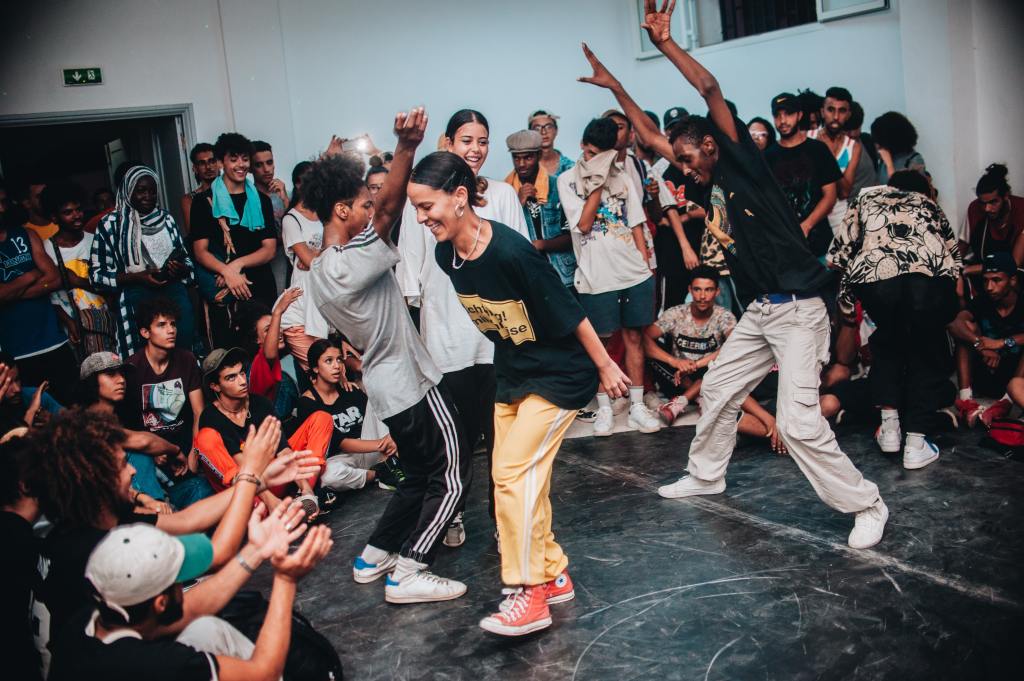
According to a 2018 Statista Research Department report on album music consumption by genre, hip-hop and rap were the most popular music in American and accounting for 21.7 percent, followed by pop with 20.1 percent, rock with 14 percent, and R&B with 10.6 percent (par. 1).
Goldman Sachs
Goldman Sachs also recognizes the popularity of hip-hop music. In 2019, Kori Hale wrote “Goldman Sachs Bets On Hip Hop And Millennials.”
According Hale’s article, Goldman”forecast that music revenue is going to more than double to about $131 billion by 2030. Currently music streaming sales are dominated by top R&B and hip-hop artists such as Drake, Kendrick Lamar, The Weekend, Migos and Cardi B. Music publishers and labels also stand to profit greatly from the rise of streaming, led by black listeners who are the largest user group…R&B and hip-hop are music’s most consumed genre and leading the industry’s revival (qtd. in Hale par.1).
These articles highlight the significance of hip-hop music, which has exploded in worldwide popularity since its origin in the 1970s in the South Bronx. Because of the influence of hip-hop on young people, a number of educators and scholars have used it in the classroom to motivate and inspire student learning. And although teachers have different opinions on the effectiveness of using hip-hop in education, it is being used more and frequently to teach students about subjects like math, science, and English.
Origin of Hip-Hop
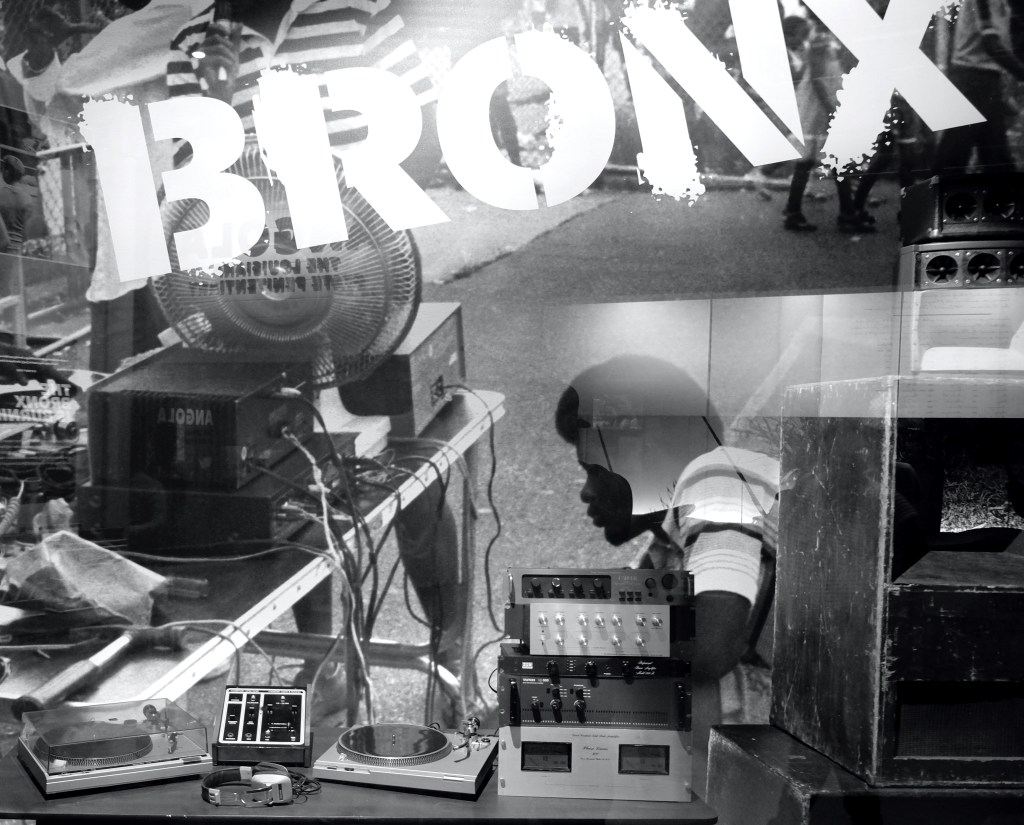
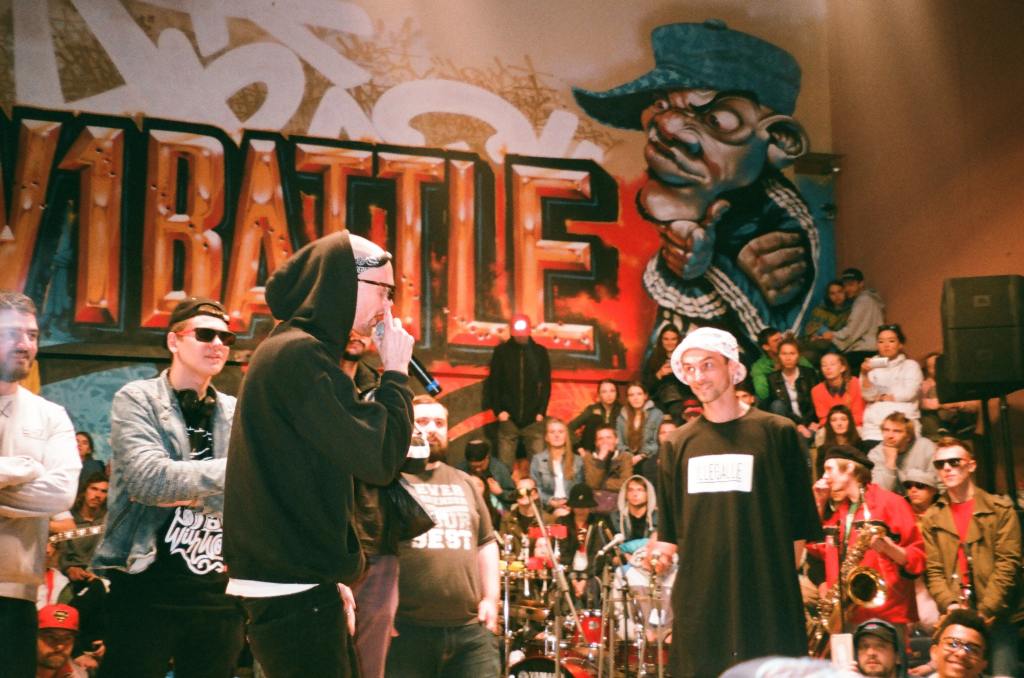
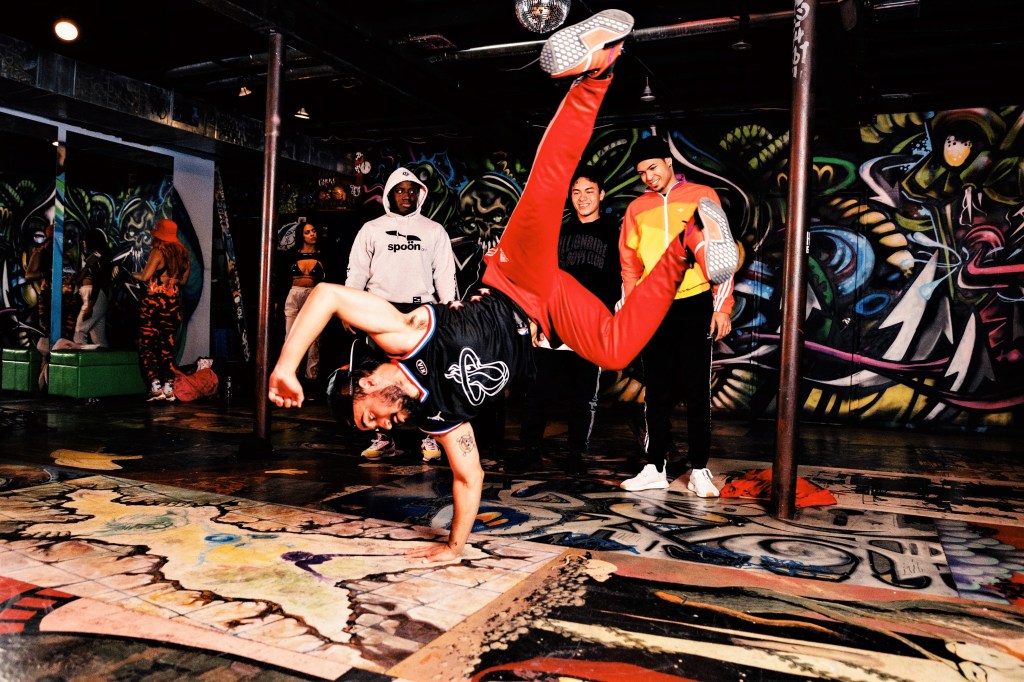
According to “Hip-Hop” in the Encyclopedia Britannica, hip-hop originated in the South Bronx in the 1970s by Black and Latino teens and is composed of four* elements: deejaying (aka turntabling), rapping (aka MCing or rhyming), graffiti painting (aka graf), B-boying (hip-hop dance, style, attitude, and body language), *knowledge of self/consciousness is sometimes added by socially conscious hip-hop artists and scholars (par.1).
Questions About Hip-Hop Based Education or Pedagogy (HHBE)
Some of the questions asked about this topic include : What is hip-hop based education? Who supports it? Who opposes it? Is there a hip-hop based curriculum? Is there certification/training for hip-hop based education? Who is qualified to teach it? Who is using hip-hop based education in their classes? How do you measure if hip-hop based education works? Are all grade levels appropriate for hip-hop based education? Who funds hip-hop based education?
What is Hip-Hop Based Education?
Professors Edmund S. Adjapong and Christopher Emdin wrote a 2015 article on the use of hip-hop pedagogy and defined it ” as a way of authentically and practically incorporating the creative elements of Hip-Hop into teaching, and inviting students to have a connection with the content while meeting them on their cultural turf by teaching to, and through their realities and experiences” (p. 67).
Education Issues
In a 2008 essay, Chance Lewis and other researchers looked at the performance of African American students. The essay focuses on African American students in urban school settings, the consistent Black-White achievement gap, and recommendations on how to close the gap. They acknowledge previous research on the Black–White achievement gap, including studies which assume the reality of high African American academic failure, studies that blame the learner for their academic situation, and studies that shows that African American learners have gone through long periods of academic successes and failures (p. 127-128).
They conclude with this thought: “Nearly 9 out of 10 African American students attending urban schools… are not meeting proficiency rates in reading and math. It is not possible to imagine a situation more bleak and disparate than the educational crisis in urban America…We reluctantly concede that in its current condition, American education is ill-equipped to meet the needs of African American learners, particularly those in urban educational settings” (p. 148).
Education writer Kate Barrington also addresses failures in American education in a 2019 article. She summarizes 15 problems with the American education system, including rising violence, student poverty, lower-performance on standardized test, mental health challenges, a lack of parental involvement, a lack of teacher innovation, and teachers using outdated teaching methods and failing to meet the needs of their students (pars. 6-20).
These essays detail serious problems in American education. Can hip-hop based learning help to address a system that is failing to meet the needs of its students?
Can Hip-Hop Based Learning Address Education Issues?
In an article entitled “About,” The Harvard Educational Review discusses the 2013 book In Schooling Hip-Hop: Expanding Hip-Hop Based Education Across the Curriculum, by editors Marc Lamont Hill and Emery Petchauer.
Marc Lamont Hill and Emery Petchauer
Hill and Petchauer are scholars that support using hip-hop based learning in the classroom to promote learning and to address some of the failures in American education. They emphasize the need for a “deeper aesthetic, epistemological, and theoretical engagement with hip-hop as a holistic cultural movement” beyond teachers who use rhymes to help students memorize facts or to encourage adherence to dress codes. Both support additional research on hip-hop culture and how HHBE can be used in subjects other than English (qtd. in “About” par. 2).
Although using rap and rhymes to help students with memory is popular, both remind us that hip-hop pedagogy extends beyond teachers who rap. They advocate that HHBE find alternatives to using “rappin” as the main teaching tool, and they also call for more educational focus on knowledge of self, the fifth element of hip-hop (qtd. in “About” pars. 1-2).
In one section, Hill and Petchauer show how hip-hop is even being used to influence how Brazilians see citizenship and education. They describe how the Canhema Cultural Center in Rio de Janeiro was initially operated by the government but subsequently turned over to a committee and later became known as the “Hip-Hop House,” which focuses on the relationship between the hip-hop arts and Brazilian hip-hop cultural forms (qtd. in “About” par. 5).
According to the Review, one weakness of the book is its inability to draw a strong connection between hip-hop pedagogy and academic content, however, in each chapter the editors promote the importance of hip-hop pedagogy in the twenty-first century (qtd. in “About” pars. 6-7).
Using Hip-Hop Based Education in the Classroom
Donna-Claire Chesman looks at the use of HHBE in a 2018 article called “From the Crates to the Classroom: Legitimizing Hip-Hop in Education.” She focuses on Cassie Crim, a Joliet West High School teacher in Illinois who incorporates hip-hop learning into her math classes, and Alex Fruchter, an Assistant Professor of Instruction at Chicago’s Columbia College who uses hip-hop learning in all three of his classes.
Cassie Crim
Ms. Crum has been teaching math for 10 years and did a rap video based upon a Cardi B Grammy-nominated song. After the video was released, Ms. Chum noticed more student participation and engagement in class. For example, one student said, “Ms. Crim, I can’t stand math, but dang, you doing this video caught me off guard and now I’m gonna have to really pay attention” (qtd. in Chesman par. 8).
She knew that she had inspired that student. “He said that to me in the middle of class. Good! That was the purpose. I want to connect with my students, I wanna get them engaged and get that buy-in” (qtd. in Chesman par. 8).
Alex Fruchter
Alex Fruchter, an Assistant Professor of Instruction at Chicago’s Columbia College, is another teacher that incorporates hip-hop into his courses to help prepare students for life in the music industry. The courses are Business of Music, Applied Marketing: Music Business, and AEMMP Hip-Hop Practicum (qtd. in Chesman par. 12).
Fruchter says, “I use stories from Closed Sessions in all my classes, and I bring in artists, attorneys, music supervisors, booking agents, etc. in all my classes. I actually wrote a hip-hop based curriculum called ‘You Can Quote Me On That.’ It used hip-hop songs to teach psychology and sociology to elementary and high school students” (qtd. in Chesman par. 13).
He is proud of the AEMMP practicum course, which is closely tied to hip-hop. In the course, students get the full label experience, which includes pitching the college for a budget, setting up studio sessions and events, and running social media campaigns (qtd. in Chesman par. 14).Fruchter believes that hip-hop based education is becoming more prevalent in the classroom and that “Education is part of hip-hop culture…The fifth element of hip-hop is knowledge” (qtd. in Chesman par. 18).
Quan Neloms
I also came across a 2018 self-profile about Quan Neloms in the Education Post called “VIDEO: This Detroit Teacher Uses Hip-Hop Literacy to Engage His Students and the Community.” Be sure to view the link in the Education Post below which contains a video on Neloms that he probably videotaped himself.
Neloms is a Detroit teacher who uses hip-hop in the classroom to encourage his students to think creatively by analyzing hip-hop lyrics. He found that by engaging his students in hip-hop analysis, he was able to increase student achievement using a curriculum called Rhymes with Reason and increase test scores and achievement within a 10- week period (par. 10).
For additional information about the Rhymes with Reason program, please see Rhymes with Reason: Teach Using Hip-Hop Lyrics
Neloms also started the Lyricist Society seven years ago, a program that uses hip-hop to get students more involved in their learning (par. 5). He calls it an important program because “The subjects and vocabulary utilized in hip-hop are tools that engage students in higher-level thinking. And seeing their own interests touted as brilliant and scholarly leads them to see themselves in the same light” (par. 7).
For additional information about the Lyricist Society, please see this video at: What is Lyricist Society? – YouTubeTeaching Hip-Hop Based Education
Although it sounds reasonable to promote addressing education issues with hip-hop based learning, how do teachers learn how to teach it?
Teaching Hip-Hop Based Education
Professor Nolan Jones of Mills College in Oakland, California, addresses this question in a 2020 essay called “Why Hip-Hop Belongs in Today’s Classrooms.” He highlights teachers who use the most popular music in America to make subjects more relevant to their students. For example, one instructor teaches high school math and uses rap in her class, another uses rap to study current events and history, and a third has his students study rap lyrics for college vocabulary and concepts relating to American history (pars. 1-5).
Jones calls this type of teaching hip-hop pedagogy, or teaching that uses the popularity of hip-hop to motivate student learning, and he says each of the teachers using it has seen improvement in pupil test scores and achievement. Jones has taught hip-hop pedagogy courses for the last 10 years for K-12 teachers and for higher education teachers, and he believes that the courses can help connect students to subjects from Shakespeare to neuroscience. The keys to teaching hip-hop pedagogy are for teachers to be genuine, avoid gimmicks, and to keep their instruction relevant to the subject matter (pars. 6-9).
Jones also emphasizes the importance of almost 30 years of scholarly research examining the effectiveness of hip-hop in education. The research “has found that hip-hop can be used to teach critical thinking skills, critical literacy, media literacy skills, STEM skills, critical consciousness and more” (par.11). In addition, over 300 colleges and universities now offer courses on hip-hop, despite initial questions about the validity of this approach (pars.10-13).
Jones argues that more teachers need to use hip-hop culture to reach students because “Many students are already forming their views of society and the world based on the lyrics of their favorite rap artists. It only makes sense to infuse what they’re already listening to into the class so that – at the very least – there’s a common point of reference” (par. 20).
Final Thoughts and Observations
We looked some information on whether hip-hop music should be used to promote learning, and I think that the arguments are persuasive. This post links the popularity of hip-hop with education to get the conversation started, and in my next post, we will look at opposition to using hip-hop in the classroom.
I would like to know your thoughts on this topic, and I have started a Facebook Group on Using Hip-Hop in the Classroom. Please join this group to share any information or ideas. You can also send me an email. Thank you for reading this post and for all of your thoughts and ideas!
Works Cited
Adjapong, Edmund S., and Christopher Emdi. “RETHINKING PEDAGOGY IN URBAN SPACES: IMPLEMENTING HIP-HOP PEDAGOGY IN THE URBAN SCIENCE CLA.” Journal of Urban Learning Teaching and Research, 2015 Vol.11, Pp. 66-77, 2015.“About.” Harvard Graduate School of Education, www.hepg.org/her-home/issues/harvard-educational-review-volume-84-number-1/herbooknote/schooling-hip-hop.
Barrington, Kate. “The 15 Biggest Failures of the American Public Education System.” Public School Review, 2 May 2019, www.publicschoolreview.com/blog/the-15-biggest-failures-of-the-american-public-education-system.
Caulfield, Keith. “U.S. Music Consumption Up 12.5% in 2017, R&B/Hip-Hop Is Year’s Most Popular Genre.” Billboard, 3 Jan. 2018, www.billboard.com/articles/columns/chart-beat/8085975/us-music-consumption-up-2017-rb-hip-hop-most-popular-genre#:~:text=R%26B%2Fhip%2Dhop%20music%20was,(up%20from%20566.1%20million).
Chesman, Donna-Claire. “From the Crates to the Classroom: Legitimizing Hip-Hop in Education.” DJBooth, DJBooth, 14 Feb. 2018, djbooth.net/features/2018-02-14-hip-hop-education-legitimized.
Department, Published by Statista Research, and Jan 8. “Music Album Consumption in the U.S. by Genre 2018.” Statista, 8 Jan. 2021, www.statista.com/statistics/310746/share-music-album-sales-us-genre/.
Department, Published by Statista Research, and Jan 8. “Music Album Consumption in the U.S. by Genre 2018.” Statista, 8 Jan. 2021, www.statista.com/statistics/310746/share-music-album-sales-us-genre/.
Hale, Kori. “Goldman Sachs Bets On Hip Hop And Millennials For Music Revival.” Forbes, Forbes Magazine, 6 Feb. 2019, www.forbes.com/sites/korihale/2019/02/06/goldman-sachs-bets-on-hip-hop-and-millennials-for-music-revival/?sh=451444dc6f17.“Hip-Hop.”
Encyclopædia Britannica, Encyclopædia Britannica, Inc., www.britannica.com/art/hip-hop.
Lewis, Chance W. Lewis W., et al. “Framing African American Students’ Success and Failure in Urban Settings A Typology for Change .” Urban Education, 2 Mar. 2008, uex.sagepub.com hosted at online.sagepub.com .
Miles, James. “Why Education Needs Hip Hop.” TEDxSeattle, 19 Feb. 2020, tedxseattle.com/talks/why-education-needs-hip-hop/.
Phillips, Yoh. “Hip-Hop Is America’s Biggest Genre. What Happens When We Enter 2020?” DJBooth, DJBooth, 23 Sept. 2019, djbooth.net/features/2019-09-23-how-does-hip-hop-progress-in-the-2020s.
Quan Neloms is a public school teacher at Frederick Douglass Academy for Young Men in Detroit. “VIDEO: This Detroit Teacher Uses Hip-Hop Literacy to Engage His Students and the Community.” Education Post, 15 Feb. 2018, educationpost.org/video-this-detroit-teacher-uses-hip-hop-literacy-to-engage-his-students-and-the-community/.“
Rhymes with Reason.” Rhymes with Reason: Teach Using Hip-Hop Lyrics, www.rhymeswithreason.co/signup/teacher
“Why+Education+Needs+Hip+Hop+-+TEDxSeattle – Video Search Results.” Yahoo!, Yahoo!, video.search.yahoo.com/yhs/search?fr=yhs-pty-pty_searchbar&hsimp=yhs-pty_searchbar&hspart=pty&p=Why%2Beducation%2Bneeds%2Bhip%2Bhop%2B-%2BTEDxSeattle#id=1&vid=c9fa429f5d5e23e15322b99746505068&action=click.
 Tutor With Larry